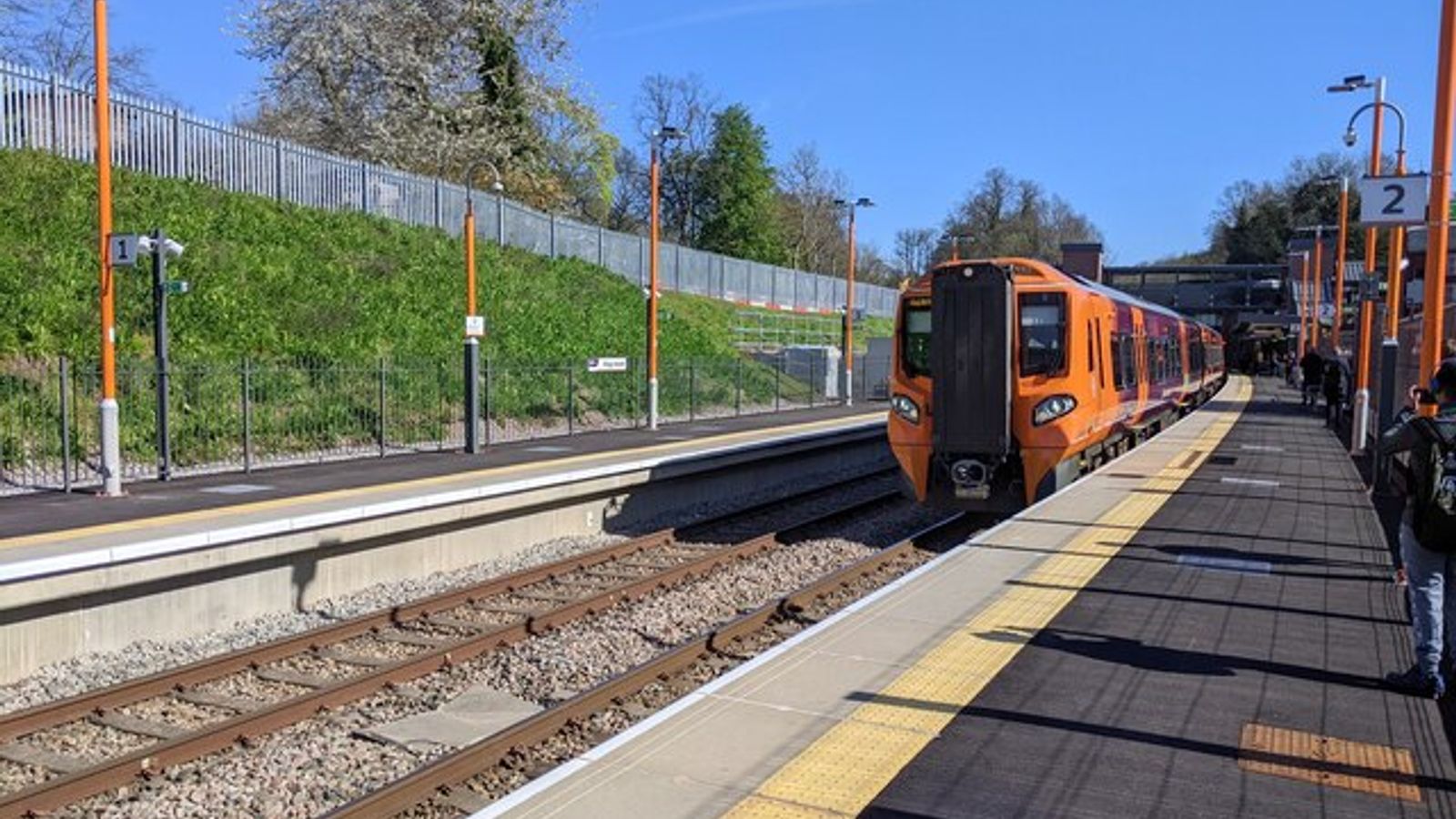
The first thing to know is simple: it is open, it works, and it is busy. On Tuesday 7 April 2026, passenger trains began calling at the new Kings Heath station on the Camp Hill Line — the first to stop here since the original station closed in 1941. Eighty-five years after the last service, south Birmingham has a direct rail link into the city centre again.
Kings Heath is one of three stations opened that week, alongside Moseley Village and Pineapple Road, as part of a £185 million project to reinstate passenger services on the line. Trains run to and from Birmingham New Street twice an hour from Monday to Saturday, with an hourly service on Sundays, from modern platforms with footbridges, lifts and step-free access.
The early numbers tell their own story. In the first two months alone, the three new stations together welcomed around 130,000 passengers. For a suburb that spent decades relying on the bus, that is a remarkable start — and it came before a single winter had tested the timetable.
Traders on the High Street noticed quickly. Enki Gift Shop reported a lift in footfall within days of the opening. Loco Lounge ran a simple welcome offer — bring your train ticket, collect a free coffee — and found commuters using it on the journey home, then families arriving by rail at weekends. At The Station pub near the platform, staff describe the new link as the easy way to reach New Street and the High Street alike.
A little further along, on Poplar Road, the mood matches. Cheryl Brannon of The Jewellery Stop hopes the station will make Kings Heath “more accessible to a wider community”, while Neville Summerfield of Contrasts Florists — a Kings Heath man who remembers when the old station site lived on as a coal wharf — keeps returning to one word: connectivity. Fares, he notes, are competitive enough to encourage exactly that.
Independent shops further out feel it too. Jane Morel of The Book Tower says customers have told her it is now easier to hop on the train and get here than to drive — and she describes the difference the service makes to parts of south Birmingham with thin bus provision as massive.
There is a pleasing symmetry in all this. The original station stood opposite the High Street until wartime coal shortages closed it in 1941, and its building outlived its platforms by decades. The campaign to bring trains back ran for years — discussed locally for a decade before construction began — and survived delays and rising costs along the way. The suburb that kept the faith now has a bright, step-free station to show for it.
For local businesses, the case is straightforward: a station changes the catchment. Customers can arrive from Kings Norton, Moseley or the city centre without joining the traffic on the Alcester Road. Staff can commute more easily. Visitors can combine a trip with the Village Square, the food quarter along York Road or the independents on Poplar Road — without planning a parking strategy first.
It is equally easy to build a day around. The station sits moments from the High Street. The Farmers’ Market fills Kings Heath Village Square from 9am-2pm on the first Saturday of the month, and the walk between the two passes some of the most characterful independent shopfronts in Birmingham.
There will be bedding-in months ahead, as timetables settle and travel habits form. But businesses across the area describe the same quiet calculation: more people, arriving more easily, with time to spare.
KHBA will keep working with Birmingham City Council, Transport for West Midlands and neighbouring organisations to help new arrivals find the nooks as well as the main drag — the side streets, the squares and the shops worth a second visit. Eighty-five years is a long time to wait for a train. Kings Heath intends to make the most of it.